AfriPlantSci branding and course materials
Branding and course development
I’ve been associated with the John Innes Centre’s training programme, AfriPlanSci, for around a decade now. In that role I’ve help design the logo, create web pages, typeset the training materials, teach on the programme and help design the impact strategy and evaluation.
AfriPlantSci is a training program and workshop series designed for early-career researchers in Africa, focusing on plant health, modern crop breeding, and genome editing technologies. The two-week training workshop has taken place three times: Kenya in 2017, Tanzania in 2019 and Morocco 2025.
Logo
I designed the logo years ago when I had just started making these kinds of graphics. The scope for the logo was the reflect the nature of the platform in supporting African plant science. The seed itself is a nod to the capacity building component.

There are a few parts of the logo that I would change going back, but the main one would be the use of the gradient. Much of the content for AfriPlantSci was printed, and often this printed blue-green gradient rendered poorly.
Training manual
From the start, we wanted the AfriPlantSci course to be accompanied by a training manual that clearly communicated the content and provided a reference.
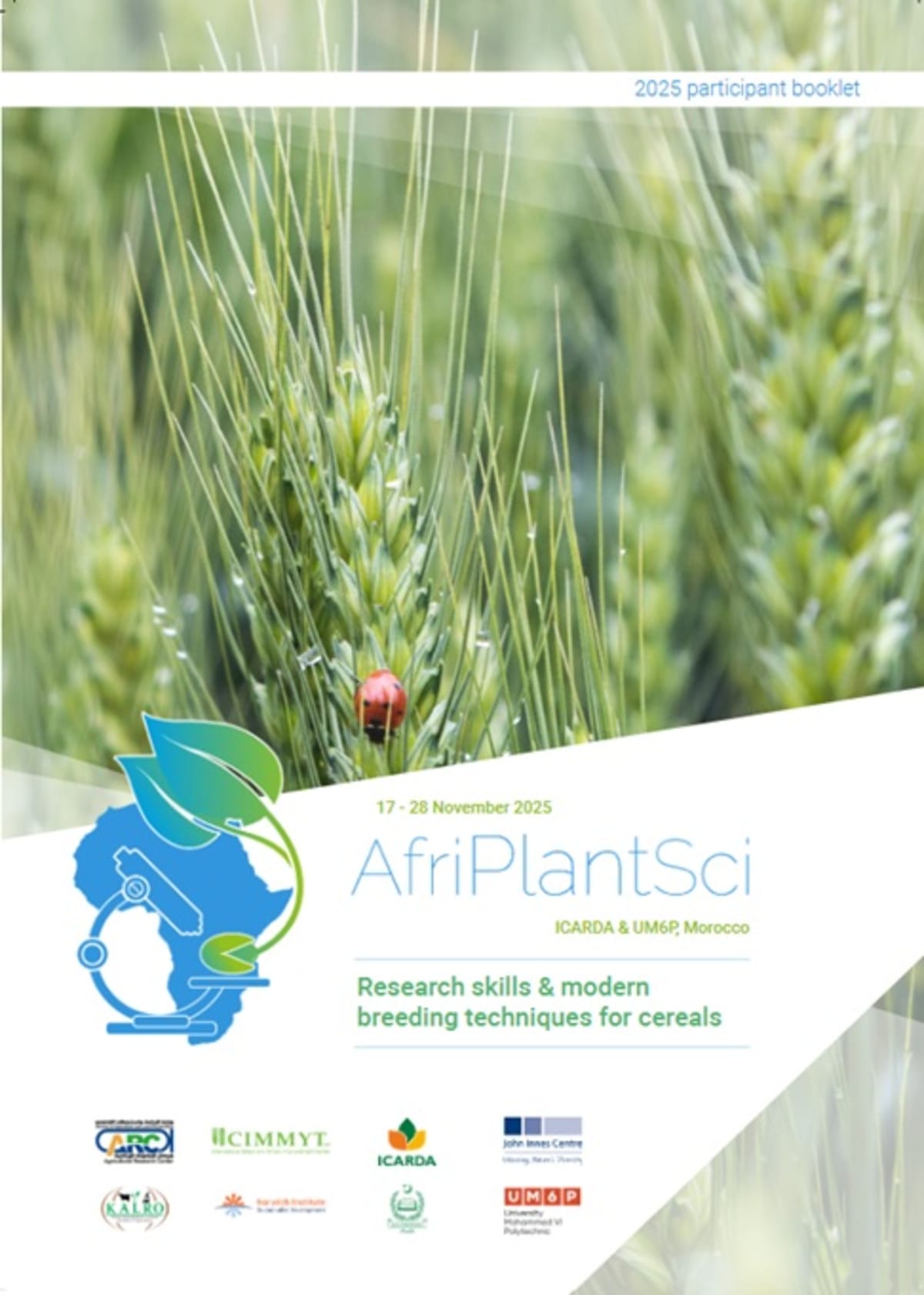
I’ve typeset three course booklets for the AfriPlantSci event. Each contains a combination of technical lab science and personal development skills. All three were typeset in Adobe InDesign. Here’s the cover from the 2025 report.
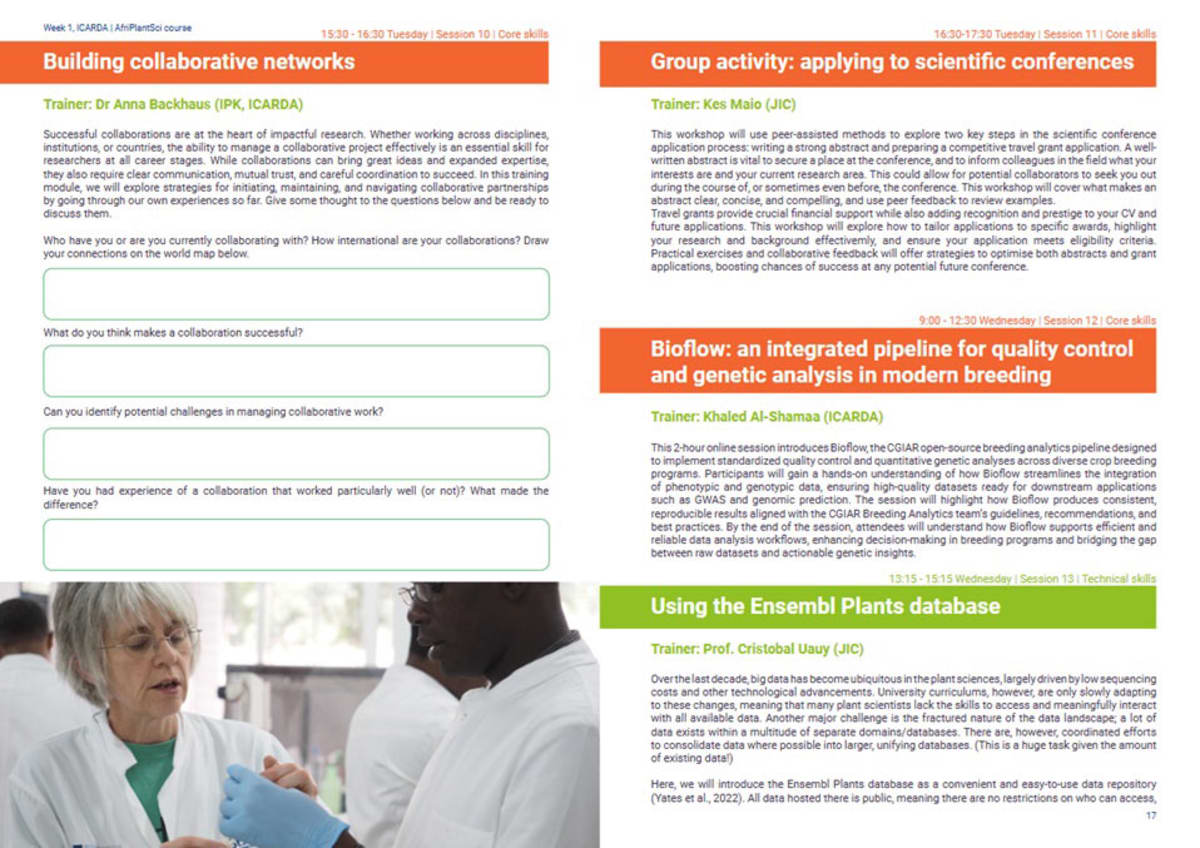
And an example below of how the content with was displayed.
The booklets were printed in wirobound booklets to allow them to easily sit flat on a surface while following a protocol. The front and back covers also had a clear plastic cover to prevent liquid damage to the document.
Reporting
I assisted in developing the theory of change, measurement framework and reporting. These documents can be found on this page, alongside the the training manuals.
Impact planning was achieved through designing an actor-filled theory of change that targeted technical capacity improvements, inter-personal confidence building and institutional network strengthening. Indicators were designed for outputs and outcome, which informed the measurement framework of what data would be collected and how to check for change as a result of the programme. Training needs assessments, a baseline and reporting immediately following the training, six months and a year later. Reports shared this data to inform future training workshops.