MARPLE Diagnostics
Mobile and Real-time dianostic platform
I have worked for many years with Diane Saunders (John Innes Centre) on the branding, graphic design, article writing, photography, videography and website for MARPLE Diagnostics.
MARPLE Diagnostics
Wheat is one of the world’s major crops, supplying around 20% of calories. These harvest are threatened each year by damage from fungal diseases called wheat ‘rusts’. The greatest way to protect wheat harvests from being infected is to grow wheat varieties with innate resistance, but new rust strains are constantly developing which could overcome this resistance. Just like with the human flu virus, the best way to stay ahead of the rusts is to track the emerging new strains, and plan disease prevention control accordingly.
The challenge is that many lab globally lack the equipment to track rust strains. This is where MARPLE comes in.
Mobile And Real-time PLant disEase (MARPLE) Diagnostics is an all-in-one mobile lab set up to identify wheat rust strains within 48 hours. The entire set up is so mobile that it can run on battery power and be conducted from the field site.
Diane was later named the 2019 BBSRC Innovator of the Year for international impact for developing the platform.
Visual content
I was brought in to help the MARPLE platform improve its visibility, with the priority being a logo, branding and photos of the work. This work would coincide with the first use and teaching of the platform in the field, starting with Ethiopia on account of it being the largest producer of wheat in Africa. I also followed the training for this work in Kenya - both for Kenyan’s and other international teams.
Logo and graphics
The scope for the logo was to include several elements which were integral to the project:
- Plant heath
- Rust or pathogens of some kind
- Research
- Genetics
Sadly I can’t find the document where I offered a few potential options but the chosen version is below.

The overall magnifying glass draws on the ‘Miss MARPLE’ reference of research and detective work that the platform is made for. A leaf is in the centre, framed by a medical cross, a rust spore is on the right edge and the rim of the magnifying glass unwraps to show a double helix DNA shape and the arrows on the right are notation for a promoter in a plasmid (a circular ring of DNA).
It’s busy and there’s probably too much going on but we seemed to get away with it.
Speaking of busy…

I thought it would be a good idea to draw every component of the MARPLE toolkit in Illustrator (shown above) which gave us a great portfolio of graphical assets to accurately portray the kit (but was possible overkill).
Photos and video
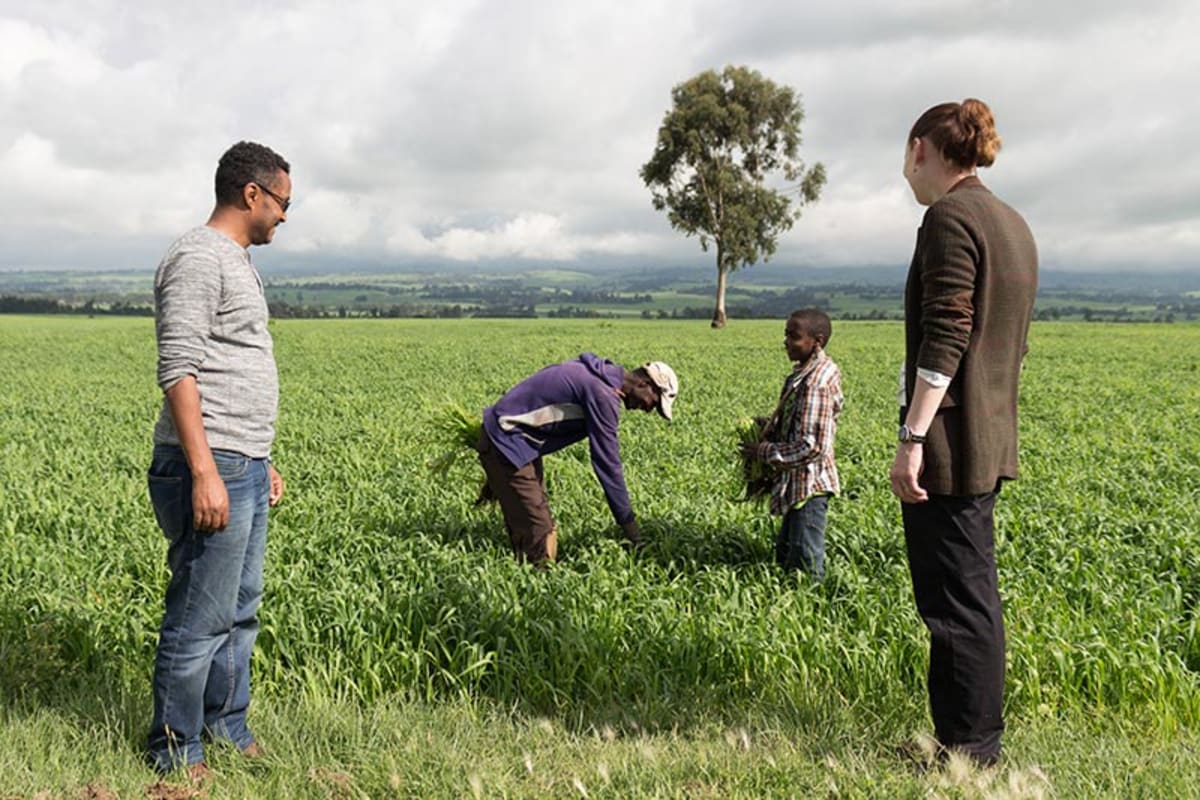
The nature of the MARPLE work meant we were often in fields or remote labs. Some of this followed the work of rust pathologist - experts who spend the rust season trawling great distances across rural areas looking for rust and taking samples. It was great to work with these researchers who are so rarely given the limelight, and yet their work is part of surveillance systems that ensure that millions can eat.
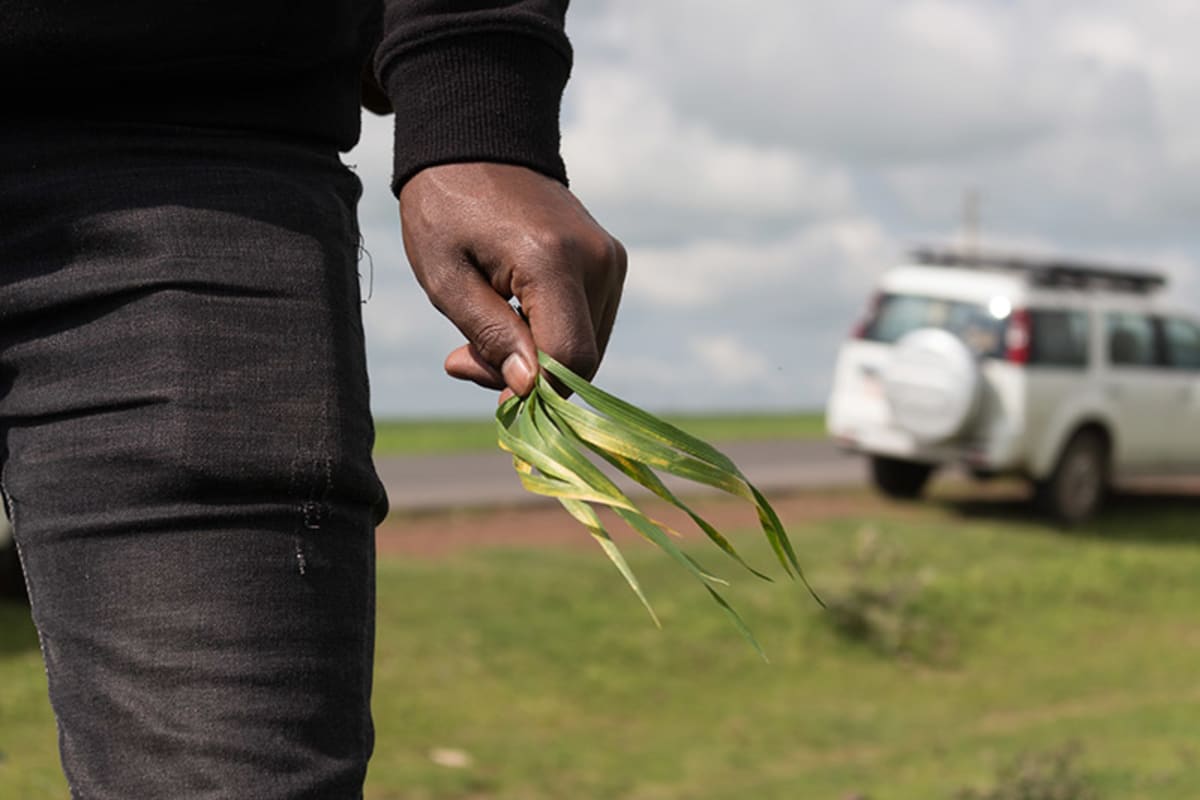
The photos above and below summarise the task - the researchers travel out in trucks across the country, stopping at wheat fields to check for signs of rust infections, show above by the orange patches across the leaves.
Most of these infections are little to worry about. They are strains that are known in the country for which there might be resistant varieties the farmer could grow instead. Farmers do not always grow resistant varieties, but at least they have the option if the rust pressure becomes too strong.
Sometimes however a new strain will will enter the country in an event known as an incursion. The concern is when this new strain has the potential to infect wheat varieties which were previously thought to be resistant.
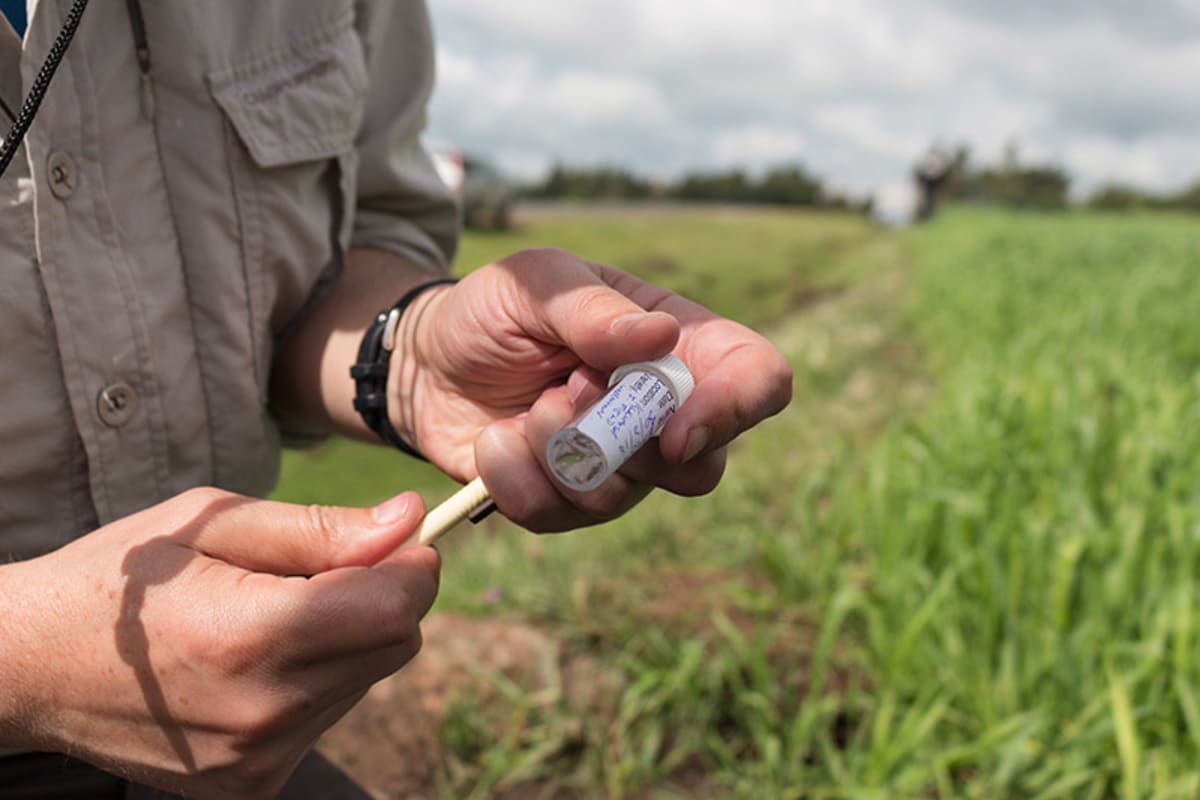
Stop anywhere in these fields and within a few moments farmers will start appearing, interested to see what is happening. Often these farmers know about the national research systems and are supportive of the work, understanding that the intention is to help farmers such as them. They are quick to share concerns about the rust and varieties they no longer grow due how susceptible they are to the fungus.
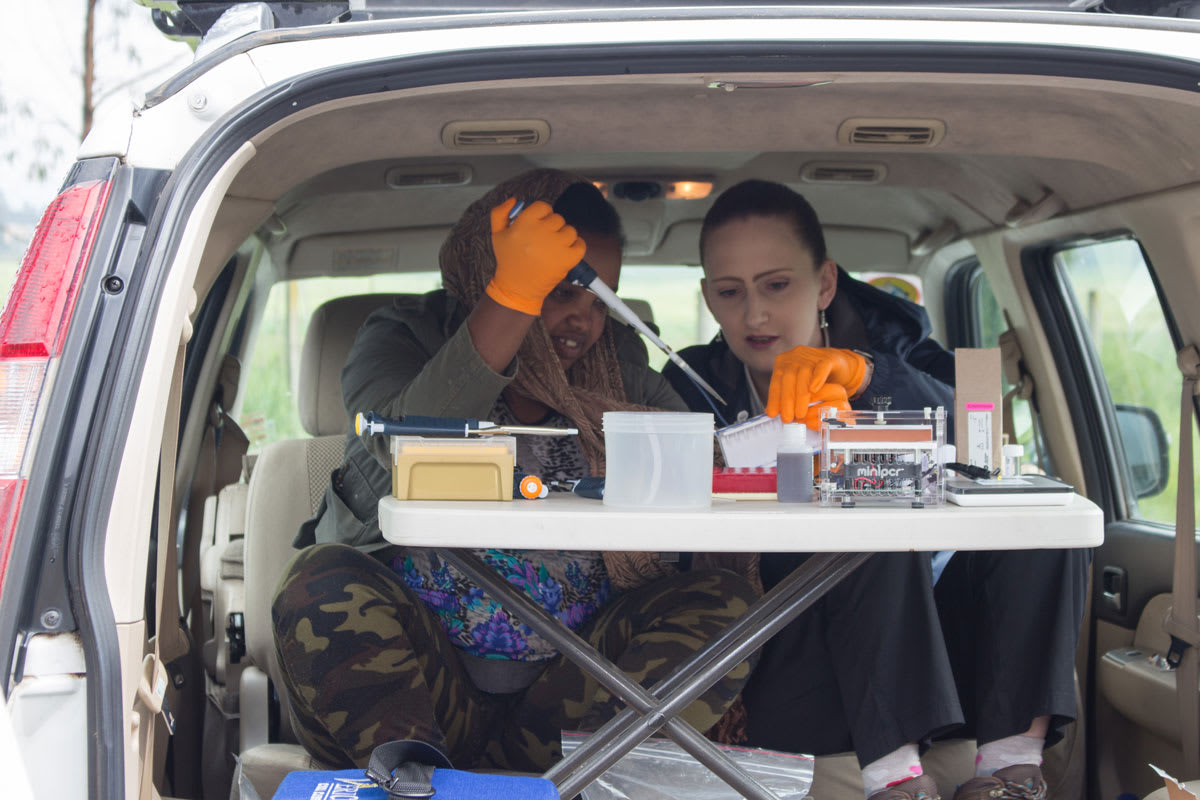
While the MARPLE platform is intended to be run from a lab, it can run from the field site. Below is the photo that was became the most widely used, with Diane demonstrating the entire practical can be run from the back of a car.
As well as photographic footage, I was able to capture video throughout these trips. These videos became a central method through which we captured the voices of the Ethiopian researchers involved in the fight to say ahead of the rust.
Website
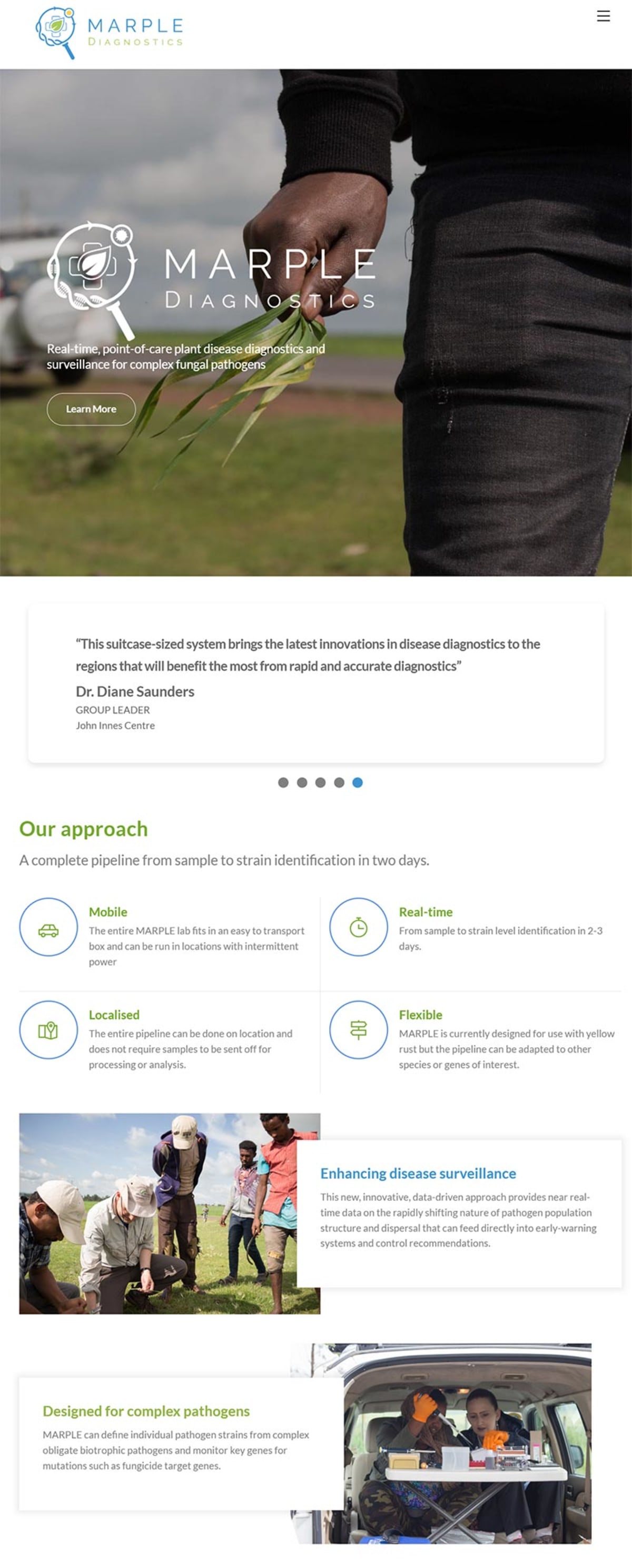
Most of the MARPLE materials were hosted on the John Innes Centre website, but eventually we decided there was enough content to build a separate website.
The site acts as a simple repository for the project information and access to the resources.