
Many know the 2026 UK wheat struggled for water but we’re also crossing the crop’s temperature thresholds - painting a concerning picture for future UK wheat and giving another example for urgent climate action:
Wheat is the UK’s main crop, with around half the harvest feeding people and half for livestock (varying with yields and grain quality). Wheat covers roughly a third of the UK’s farmed land, providing ~20% of UK calories.
So it’s concerning that 90% of UK farms just reported yields below the expected average, with many forced to harvest three weeks early 1 - for the second year running…
We are rightly concerned about water, and this concern has two extremes: (1) too much water early on; (2) too little around grain development. Climate change means UK farmers are increasingly struggling with both.
But let’s also talk about temperature.
All plants have temperature limits and these limits affect crop yields. For wheat, these temperatures are critical at two distinct stages:
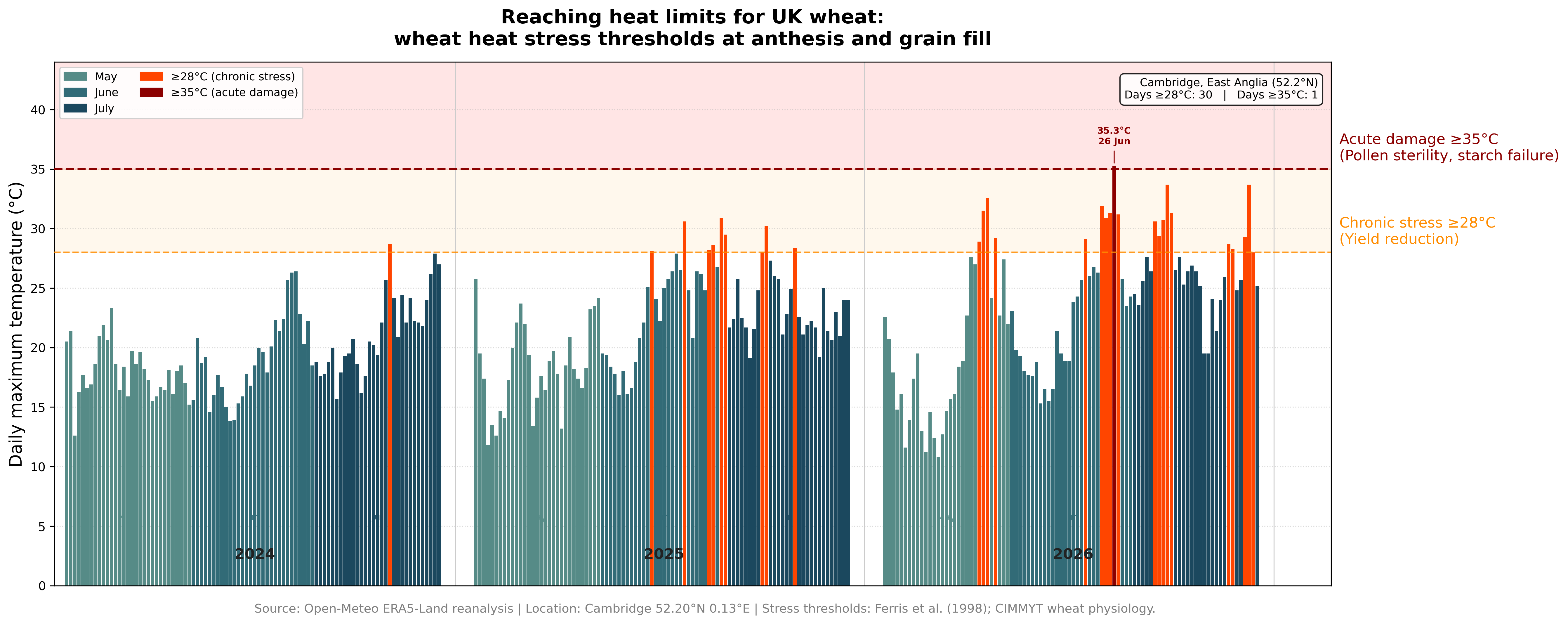
- Pollen development and flowering (UK: mid-May to June). The most sensitive point about a fortnight before flowering, when pollen is forming. Above ~28°C yield starts to be damaging; sustained spells over 35°C cause male sterility and grains that never set (non-recoverable).
- Grain filling (UK, June-July) - Heat over ~35°C inactivates the enzymes converting sugars to starch, and shortens the filling period. The result is a yield loss from shrivelled kernels and lower weight.
Heat and drought are connected risks. A watered wheat canopy cools itself by transpiring, sitting several degrees below air temperature. A crop that has run out of soil water closes its stomata and loses this cooling effect, making the plant more vulnerable. Our drier springs make hot summers more damaging.
Here’s a link to the full version of the graph in the header. In the graph, each bar is a day during May, June or July. I’ve coloured them when they breach the temperature stress points. You can see we are already in the danger zone, and we’re not far off multiple days of over 35°C.
Crop improvement offers adaptation options: e.g. heat-tolerant genetic diversity (where it exists), shifting flowering earlier to escape peak heat, and better canopy and rooting management.
But these adaptation approaches take time to bring to the field (min 10-15 years 🐌) and have their limits.
We can’t outrun these changes forever. Threats like this to the UK’s main crop must be another example of why we need major climate action now.
-
https://bakeryinfo.co.uk/ingredients/low-wheat-yields-reported-in-earliest-harvest-for-20-years/721996.article#toggle ↩